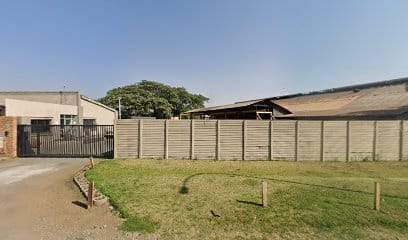
Engineering Drawing and Design – Industrial Street Light Poles and High Masts is a Manufacturer establishment in Benoni, Gauteng, South Africa
ENDD Lighting & Structural: Engineering Drawing and Design – Industrial Street Light Poles and High Masts
Engineering Drawing & Design (ENDD Lighting & Structural) operates from Benoni in Gauteng, South Africa, as a recognised manufacturer for street lighting poles, high masts and related infrastructure. The business presents itself as a comprehensive provider for the lighting industry, specialising in a wide range of poles and masts, including street light poles, decorative poles, railow/apollo masts, mid-hinged and high masts, stadium masts, solar poles and associated brackets. The portfolio also encompasses lamp posts and a variety of steel structures, with capabilities extending to mid to heavy fabrication in mild or stainless steel.
Core offerings are structured to support both the design and production processes. The company designs and manufactures lighting poles to customer specifications, with emphasis on customisation to meet exact requirements. In addition to poles, masts and brackets, ENDD provides turnkey solutions within the lighting sector, spanning client need assessment, design, civil works, assembly and erection, electrical inside the masts, mounting and aiming of lights, and the completion of handover files—including certificates of conformity (COCs) and engineers’ sign‑off on projects. This end‑to‑end capability positions the organisation as a one‑stop partner for substantial street lighting projects and related installations.
The service proposition highlights strong quality control and compliance. ENDD states that it holds ISO 9001‑2015 and OHSAS 18001 certifications, with documented quality control plans, welding procedure specifications, and procedure qualification records. All welders are described as coded welders, with test certificates readily available. Manufacturing and design are aligned with SANS standards (including SANS 10225 for poles and SANS 10214 for manufacturing), and all structural components are galvanised to ISO 1461/SANS standards. The emphasis on rigorous quality management and traceability supports public‑facing assurance for significant public works or utility installations.
Typical products and services described include:
- Lighting: design and manufacture of street lighting poles tailored to exact specifications.
- Masts: structural masts suitable for telecommunications and lighting, including high and mid‑hinged variants, with attention to strength and stability for urban and challenging environments.
- Poles and brackets: a broad range of poles for lighting, telecommunications and related applications, plus durable brackets for secure installations.
- Foundations and civils: site assessments and civil works as part of a complete project approach.
- Solar poles and solar masts: solutions integrating solar power into lighting infrastructure.
- Commercial, stadium and sportsfield lighting applications: specialised masts for stadiums and large venues, including football and tennis facilities showcased in the portfolio.
- Structural fabrication: medium to heavy fabrication, including piping, frames, feeders, chutes and complete plant structures, available in mild or stainless steel.
The company positions itself as a knowledge‑driven supplier with a substantial footprint in Africa, extending its reach to markets such as Madagascar, Mauritius and Dubai, while maintaining a local presence in Johannesburg and Benoni. The emphasis on customer care and timely delivery is repeatedly noted, aligning with a service ethos that prioritises delivering projects on schedule and according to specifications.
For potential clients, the typical engagement path appears to start with a design‑and‑manufacture request, followed by a turnkey service option that includes civil works, assembly, erection, electrical integration, aiming and handover documentation. The portfolio highlights a diverse set of completed and ongoing projects, including stadium masts, sports facilities and street light pole installations, which demonstrates versatility across different environments and scales.
Customers should expect to receive documentation of compliance and quality, including weld certificates and COCs on handover. Workmanship is described as governed by strict quality controls and coded welding practices, reflecting a focus on reliability and long‑term performance in outdoor and harsh conditions.
Practical tips for customers
- Request full certification and welding documentation to verify compliance with SANS and ISO standards prior to accepting a project handover.
- Ask for a detailed turnkey plan that outlines design, civil works, assembly, erection and electrical integration, along with expected delivery timelines and milestones.
- Confirm galvanising specifications and material grades (e.g., GW355J HT steel) to ensure durability in outdoor environments.
- Review the supplier’s portfolio for similar projects (stadium masts, solar street light poles, mid‑hinged and high masts) to gauge suitability for the intended application.
- Clarify logistics, including lead times and delivery costs, especially for remote sites or locations across Africa.
- Check for availability of handover files and engineered sign‑offs as part of project closure documentation.
- Discuss after‑sales support and maintenance options, particularly for critical lighting installations that require ongoing reliability.
ENDD Lighting & Structural presents a well‑rounded package for organisations seeking robust street lighting and mast solutions, combining design, manufacturing, quality assurance and turnkey project delivery from a Johannesburg–Benoni base with a broader African footprint.
Benoni
Gauteng
South Africa

Sorry, no records were found. Please adjust your search criteria and try again.
Sorry, unable to load the Maps API.
Manufacturer Services in Benoni, Gauteng
Benoni, a historically industrial area on the eastern outskirts of Johannesburg, offers a diverse range of manufacturing services that cater to both local businesses and regional supply chains. Providers in this Gauteng community typically focus on converting raw materials into finished goods, performing value‑added work, and supporting production needs across several sectors. The scope of services tends to reflect the practical realities of South Africa’s manufacturing landscape, including emphasis on quality control, timely delivery, and adaptable production capabilities.
Typical service categories in Benoni include precision machining, metal fabrication, plastics manufacturing, assembly and sub‑assembly work, and contract manufacturing for consumer and industrial products. From metalworking and welding to fabrication of customised components, these operations emphasise accuracy, material integrity, and consistency. Contractors often support small to medium enterprises by providing responsive production runs, prototyping, and scale‑up capabilities as demand evolves. In addition, some facilities offer on‑site engineering support, drawing interpretation, and collaboration with clients on design for manufacturability to help reduce lead times and waste.
Customers can expect a structured approach to service delivery. Initial steps typically involve a scope discussion or briefing, followed by feasibility assessment, material selection, and cost estimation. Practical considerations frequently addressed include available machinery and tooling, lead times, minimum order quantities, tolerances, and environmental or safety compliance requirements. Where relevant, suppliers may outline quality assurance practices, including inspection procedures, traceability of materials, and documentation for procurement and production records. Depending on the sector, certification discussions may arise, though these are not assumed to be universal across all Benoni manufacturers.
In practice, the workflow from enquiry to finished goods often follows a predictable sequence. A client submits specifications or drawings, the manufacturer reviews feasibility and, if acceptable, prepares a quotation. Upon agreement, a production plan is established, followed by material procurement, fabrication or machining, and assembly. Finished items undergo inspection to verify conformance with the agreed specifications, after which goods are packaged for delivery or dispatch. Throughout the process, emphasis is placed on communication, status updates, and problem resolution to minimise delays and maintain operational efficiency.
Logistical considerations are important for businesses engaging Benoni manufacturers. Proximity to major transport routes and rail links can influence delivery times and distribution planning. Clients often assess total cost, including handling and transport, especially when working with multiple suppliers or components sourced from nearby suppliers. Storage, inventory management, and packaging requirements are additional factors that customers may address in advance to ensure smooth handovers and reduce the risk of damage or misplacement during transit.
When selecting a manufacturing partner in Benoni, organisations typically weigh experience in the relevant material and process, responsiveness to custom requests, and the ability to scale production. Demonstrable track records, straightforward communication, and a practical understanding of local supply chain dynamics contribute to a positive engagement. While platform‑specific features or recommendations are not assumed, the advantages of working with a locally based manufacturer often include shorter lead times, direct problem solving, and closer collaboration on product improvements or modifications as market demands evolve.
- Precision machining and metal fabrication
- Plastic and composite part production
- Assembly, sub‑assembly, and kitting services
- Prototype development and small‑to‑mid‑volume production
- Quality assurance and basic compliance documentation
Overall, manufacturers in Benoni provide practical, turnaround‑oriented services designed to support varied manufacturing needs while navigating the specificities of the South African operating environment. Clients receive a pragmatic, business‑focused approach that prioritises reliable delivery, workable design solutions, and efficient production processes.