OCTA Engineering Kroonstad Pty Ltd is a Manufacturer establishment in Kroonstad, Free State, South Africa
OCTA Engineering in Kroonstad: Mining Equipment Manufacture and Industrial Steelwork
OCTA Engineering, trading as Octa Hoppers (Pty) Ltd, operates from Kroonstad in the Free State and specialises in the manufacture of 21st century underground mining equipment. With a factory footprint of around 6,000 square metres and a workforce of approximately 120 skilled personnel, the business presents itself as a substantial local manufacturing operation capable of handling complex, site-specific mining projects. The company emphasises sustained high quality across its product range, underpinned by ISO 9002 accreditation and a focus on efficient, safe design and fabrication processes.
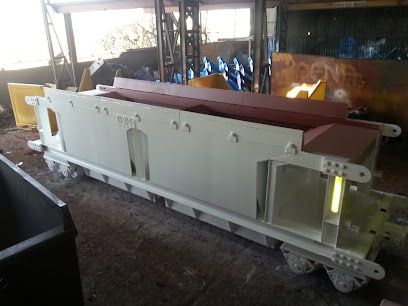
Across its service portfolio, Octa Hoppers provides a broad spectrum of mining-related manufacturing and fabrication capabilities. Core offerings include mining equipment and related steelwork, hoppers, and rolling stock. The range of rolling stock covers specialised cars for material handling and transport in mining settings, such as V-type and lockable material cars, drill steel and jumper cars, multi-container diesel cars, long material and cradle bogies, vent-pipe and rail-transport bogies, and cable-reel cars. This breadth positions the business as a capable supplier for underground mining operations that require customised transport and material handling solutions.
In addition to rolling stock, the company highlights work on boxfronts, conveyors and conveyor modules, main-line and crusher grizzlies, as well as steelwork and various chutes. Maintenance is also part of the offering, with maintenance crews available for critical breakdowns and commissioning of products and services. These capabilities suggest a workflow that can span initial design and fabrication through to commissioning and on-site support, aligning with the needs of mining sites that demand dependable, site-specific equipment and rapid responses to breakdowns.
As part of its approach to product development, Octa Hoppers stresses continual improvement, not merely for standard mining requirements but also for site-specific adaptations. The company markets itself as a specialist supplier to several mining houses and notes a commitment to environmental responsibility in its operating practices. This emphasis on design efficiency, environment, and safety aligns with the expectations of heavy-industrial clients seeking durable, compliant equipment under demanding conditions.
The business notes substantial experience in the mining sector, with a long history of working with gold, platinum, chrome and diamond mines. The combination of a dedicated drawing office and draughting expertise supports the ability to design and refine equipment with attention to practical, field-tested performance. The workforce and facilities are positioned to support fabrication, assembly, and reconditioning work, offering a full-cycle capability from concept through to reconditioning of assets such as hoppers and wheels.
Typical job types and industries
- Underground mining equipment manufacturing and fabrication
- Steelwork and structural fabrication for mining infrastructure
- Hoppers, chutes, and box-fronts
- Rolling stock and material handling cars for mining operations
- Maintenance and reconditioning of mining components
How requests typically work
Octa Hoppers portrays itself as a contract-based supplier to mining houses, capable of delivering on projects that require tailored mining equipment and associated services. The business highlights its ability to redesign and develop new products in response to specialised site requirements, which implies a collaborative design-to-fabrication process supported by a dedicated drawing office. Deadlines are presented as a priority, with assurances that quality and safety are not sacrificed in pursuit of schedule. Clients can expect a process that includes design input, detailed fabrication work, and on-site commissioning or maintenance support as needed.
Practical tips for customers
- Provide clear site-specific requirements early to enable effective design adaptations and accurate lead times.
- Discuss maintenance expectations and on-site support needs upfront to align project milestones with on-site conditions.
- Request information on safety standards and OHS compliance relevant to the project to ensure alignment with legal and site requirements.
- Inquire about the integration of environmental considerations into the equipment design and fabrication processes.
- When planning long lead-time projects, verify available factory capacity and any potential bottlenecks given the 6,000 m2 facility and 120-strong team.
Location and contact context
The operation is based at 31 7th Way, Kroonstad, 9500, in the Free State, South Africa. It serves mining operations and related industries primarily in the local region and broader South African mining sector through its contract-driven manufacturing and repair capabilities. Details on business hours are not stated publicly, so planning visits should likely align with typical industrial hours while acknowledging that formal appointments may be prudent for site access and on-site work. The company communicates via traditional channels, including telephone and email, for project enquiries and quotations.
Kroonstad
Free State
South Africa
Sorry, no records were found. Please adjust your search criteria and try again.
Sorry, unable to load the Maps API.
Manufacturer Services in Kroonstad, Free State
In Kroonstad, a town positioned along the Vaal River in the Free State, manufacturing services cover a broad spectrum of industrial activity. The environments are typically geared towards metalwork, fabrication, precision machining, and assembly for local and regional supply chains. Suppliers in this area tend to offer practical, task-focused capabilities designed to support engineering, construction, agriculture, and consumer-driven manufacturing needs.
Common offerings include versatile metal fabrication and custom component production. Workshop capabilities often encompass cutting, bending, welding, and finishing processes, enabling the creation of non-standard parts as well as small- to medium-scale production runs. Clients can expect facilities that accommodate project-based work, with the ability to transform raw materials such as steel, stainless steel, aluminium, and other alloys into recognised shapes and assemblies for further use by manufacturers or end-users.
Machining services are another core element of the sector. This typically involves turning, milling, drilling, and boring operations performed on a range of materials. Smaller job shops may focus on prototype work and rapid iteration, while larger or more established shops can handle more substantial components and assemblies. In practice, customers often bring drawings or specifications and receive finished parts ready for installation or integration into larger systems.
Fabrication and assembly capabilities are frequently complemented by surface finishing and treatment options. Surface preparation, painting, powder coating, galvanising, or other protective finishes may be offered to enhance durability and appearance. This is particularly relevant for parts used in outdoor, agricultural, or industrial settings where exposure to moisture, dust, or corrosive environments is a consideration.
Prototyping and product development support may be available, especially from firms with experience in customised solutions. Clients seeking rapid prototyping or small-batch production can benefit from iterative testing, design feedback, and adjustments before committing to larger quantities. The emphasis is often on delivering practical, fit-for-purpose components rather than high-volume marketing claims, with a focus on reliability and process efficiency.
Quality and compliance considerations are typically addressed through practical in-house checks and inspection routines. Basic tolerance checks, dimensional verification, and material traceability may form part of the workflow. Where a project requires formal documentation, clients sometimes rely on established processes within the business to provide records suitable for internal QA or supplier audits, without presuming any specific certification framework.
From a customer perspective, planning and communication are important. Clear specifications, realistic timelines, and transparent cost estimates contribute to smoother engagements. Practical factors to consider include lead times for materials, availability of skilled trades, equipment capacity, and the potential need for on-site (or near-site) delivery and installation support. Local geography can influence logistics, with access to road networks and freight routes playing a role in scheduling and cost management.
In practice, Manufacturer services in Kroonstad are oriented towards dependable, hands-on engineering solutions rather than speculative capabilities. The focus remains on delivering components and assemblies that meet functional requirements, with an emphasis on durability, serviceability, and value for money. For organisations operating in nearby towns or agricultural districts, these services often align with maintenance cycles, equipment upgrades, or customised equipment production.
Overall, customers can expect a practical, results-driven approach to manufacturing needs in Kroonstad, supported by local workshops and engineering teams that understand the demands of regional industry. The core objective is to provide usable, well-made parts and assemblies that integrate smoothly into broader production processes, with attention to safety, reliability, and practical delivery.