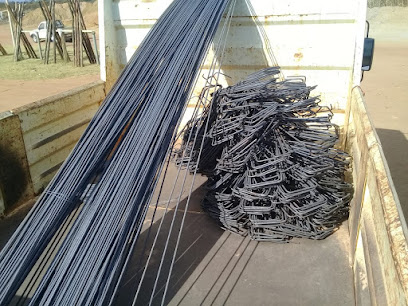
Tubecon Africa is a Manufacturer establishment in Pretoria, Gauteng, South Africa
Tubecon Africa: Pretoria-based Steel Tube and Profile Manufacturer Offering Comprehensive Value-Added Services
Tubecon Africa operates as a prominent steel tube and profile manufacturer headquartered with a manufacturing facility in Pretoria, Gauteng. Established in 1977, the business has expanded from producing round, square and rectangular tubes to supplying a broad range of steel products and value-added services across South Africa and neighbouring countries. Its operations are complemented by a Cape Town branch and its own fleet, enabling daily deliveries within Gauteng and the Cape Town region, with regular service extendable to Durban, Pietermaritzburg and Bloemfontein.
The company’s product range covers both standard and application-specific tubes, catering to diverse industries. Application-specific tubes include lancing tubes, scaffold tubes, conveyor tubes and borehole casings, while Big Bore Welded Tube features diameters starting at 175 mm with thicker walls ranging from 3 mm to 12 mm. Structural steel tubes—encompassing round, square and rectangular formats—form a core portion of the offering, alongside closed profiles such as D-sections and oval tubes, as well as non-standard profiles. Conduit and conduit accessories are available in lightweight variants and can be supplied in black or galvanised finishes. Customised open profiles—top hats, top rails and side rails among them—are produced to customer specifications, while lip and open channels are rolled to length, punched and pin-marked. The Sunstep product line provides industrial rooftop walkway solutions for safety and access on rooftops.
Tubecon Africa emphasises its full spectrum of value-adding services designed to streamline customer procurement. Cut-to-size services enable tubes to be supplied to precise length requirements for round, square and rectangular profiles. Flaring is offered to expand tube ends, and swaging is used to decrease the outside diameter of the last section of a tube. A kitting capability has been developed to combine all value-added solutions into consolidated kits, improving efficiency and reducing handling for clients. Plate laser cutting services accommodate sheet metal components up to 40 mm thick, spanning a range of materials, while tubelaser cutting further enhances convenience by providing both tubes and cutting in a single location. These integrated services aim to support clients from initial quotation through to delivery and after-sales support.
Materials available for rolling profiles and tubes include hot-rolled SAE1008, cold-rolled SAE1010, S355 high-tensile steel, pre-galvanised Z275 and ZAM, plus newer corrosion-resistant options such as 3CR12 stainless steel and Supraform 700. The comprehensive Tubecon catalogue presents the full offering with size, thickness and material details for interested customers to review before making a purchasing decision.
Customer feedback, as reflected in public visitor reviews, highlights a mix of perceptions. Several reviewers note the friendly and helpful nature of staff and underscore positive experiences with service and staff interaction. However, some comments point to challenges with delivery timeliness and reliability, indicating that delivery performance has fluctuated over time. This mix of feedback suggests a business undergoing changes aimed at improving logistics and consistency in service levels, alongside continued strengths in technical capability and product breadth.
In practical terms, prospective buyers should consider Tubecon Africa as a one-stop source for both standard and customised steel tube and profile needs, with the added benefit of on-site laser cutting and related fabrication services. The integrated supply model—supported by a dedicated fleet and multiple access points across major South African cities—can reduce lead times for regional customers and help align production schedules with project timelines.
Typical job types aligned with Tubecon Africa’s offer span construction, manufacturing, engineering and installation projects requiring robust tubular components, support structures, frames, safety stands and bespoke profiles. Typical workflows involve initial consultation and quoting, followed by precise cutting to size, potential flaring or swaging, and, where applicable, plate laser cutting and subsequent kit assembly. The company also supports complex orders through its Tubecon Laser division, enabling customers to source both hardware and fabrication services from a single supplier.
Practical tips for customers planning to engage Tubecon Africa include: clearly specify required tube dimensions, wall thickness and material grade to ensure accurate quotes; consider whether an on-site kit solution would optimise assembly and on-site handling; explore plate laser options if sheet-metal components form part of the project; and discuss delivery schedules upfront, balancing lead times with the project’s critical path. When calculating total project costs, factor in potential post-delivery support and any after-sales service that may be necessary to address fitment or installation questions.
Overall, Tubecon Africa presents itself as a substantial manufacturing partner in Pretoria, offering an extensive steel tube and profile portfolio, with complementary fabrication services designed to streamline procurement, production and installation processes for a range of industrial applications.
Pretoria
Gauteng
South Africa

Sorry, no records were found. Please adjust your search criteria and try again.
Sorry, unable to load the Maps API.
Manufacturer Services in Pretoria, Gauteng
In Pretoria, Gauteng, manufacturing services are delivered through a diverse landscape that spans metalworking, plastics processing, electronics assembly, and specialised fabrication. The city’s position within a dense industrial corridor offers proximity to suppliers, skilled trades, and logistics networks that support a range of production, prototyping, and finishing activities. Clients typically engage manufacturers to convert designs and specifications into physical products, with emphasis on reliability, repeatability, and effective production planning.
Customers can expect a structured workflow that begins with inquiry and design interpretation, followed by feasibility assessment, material selection, and a detailed production plan. Communication is prioritised to capture technical requirements, tolerances, desired finishes, and delivery windows. Where possible, manufacturers may provide guidance on material suitability, process options, and cost implications to help refine concepts before substantial commitments are made. The relationship often involves iterative prototyping, through to pilot runs and scalable production, depending on order size and lead times.
Typical services offered by manufacturers in this region encompass several core capabilities. These include the following:
- Custom fabrication and machining, including cutting, bending, welding, milling, turning, and surface finishing to specified tolerances.
- Prototype development and small-to-medium batch production, enabling design validation and iterative improvement.
- Sheet metal work, including fabrication, punching, stamping, and assembly of metal components for various industries.
- Plastic and composite processing, covering extrusion, injection moulding, thermoforming, and related assembly services.
- Electronic assembly and wiring, ranging from simple assemblies to more complex integrations in control panels and device enclosures.
- Finishing services such as coating, painting, powder coating, galvanising, and plating to achieve functional or aesthetic requirements.
- Quality assurance and testing support, including inspection, dimensional verification, and compliance checks relevant to local standards.
- Final assembly, packaging, and logistics coordination to prepare products for distribution or deployment.
Customers should anticipate practical considerations unique to Pretoria and the broader Gauteng environment. Energy reliability and cost can influence production planning, with some facilities adopting energy-efficient processes or scheduling that optimises off-peak utilisation where feasible. Access to skilled technicians, machinists, and engineers is a key strength, though capacity and lead times may vary with market demand and project complexity. Local suppliers and subcontractors often provide a responsive ecosystem for components, tooling, and auxiliary services, supporting rapid turnarounds and multistage projects.
From a project management perspective, typical engagements require clear documentation of drawings, material specifications, required certifications, and delivery milestones. Lead times are commonly influenced by material availability, equipment setup, and inspection regimes, while logistics considerations include regional road and rail connectivity, export options, and customs procedures where applicable. Quality control practices usually emphasise traceability, process documentation, and measurement records to meet customer expectations and industry norms.
For organisations seeking to partner with a Pretoria-based manufacturer, considerations include the capability to scale production, the reliability of supply chains, and the ability to provide workable alternatives when faced with disruptions. A local supplier base often enhances responsiveness to urgent requirements, with proximity supporting on-site visits, design reviews, and hands-on collaboration during the development phase. Ultimately, the objective is to deliver finished components or assemblies that satisfy technical specifications, meet agreed timelines, and align with budgetary constraints.