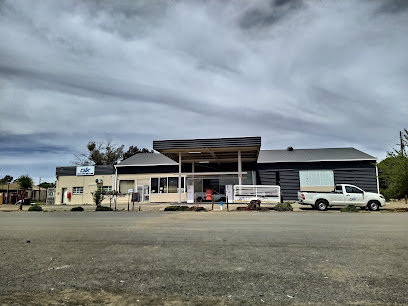
Hobhouse Permaculture & Training is a Agricultural cooperative establishment in Hobhouse, Free State, South Africa
Hobhouse Permaculture & Training — Agricultural Cooperative in Hobhouse, Free State
Hobhouse Permaculture & Training is presented as part of the agricultural cooperative landscape in the town of Hobhouse, situated in the Free State province of South Africa. Available public information is limited, with the primary online presence appearing to be a Facebook group page that requires users to log in to access content. The visible material does not provide a formal description of the organisation’s mission, staff, or a definitive list of services. A single publicly visible visitor review, attributed to Anica Le Grange as a local guide, confirms activity on the platform but does not include substantive detail about the services offered or the client experience. As a result, the summary below relies on typical expectations for groups operating within the permaculture and agricultural cooperative category, alongside cautious observations drawn from the available public footprint.
Overview of main services offered (as commonly associated with permaculture and agricultural cooperatives):
- Permaculture design and planning concepts—Typically, organisations in this space assist with designing sustainable, low-input land-use plans. Activities may include site assessment, water management strategies, soil-conscious planting schemes, and zone planning aimed at increasing resilience and biodiversity. The exact scope, pricing, and delivery method for these design services are not specified in the available public content.
- Practical training and capacity building—Training offerings are often central to permaculture groups, potentially including workshops, short courses, ongoing mentorship, and hands-on demonstrations designed to cultivate practical skills in ecological farming, composting, seed saving, mulching, and sustainable grow‑out practices. No explicit timetable or curriculum is publicly listed in the accessible material.
- Community and cooperative initiatives—As an agricultural cooperative, the entity may support collaborative farming, resource sharing, and local knowledge exchange among members. The public record does not delineate membership details, governance structures, or how community members participate in decision-making.
- Consultation and advisory services—In this sector, advisory work can cover crop selection aligned with local climate, soil management, garden-to-market pathways, and ecological stewardship. Specific consulting modalities, levels of accreditation, or success metrics are not documented in the supplied sources.
- Project development and advisory for smallholders—Groups in this category sometimes engage with small-scale farmers on project scoping, feasibility, and implementation support for regenerative farming initiatives. The extent of such offerings for Hobhouse Permaculture & Training remains unspecified in the available materials.
How requests typically work (inferred from common industry practice and the limited public record):
- Initial inquiry and scoping—Potential clients or community members usually initiate contact to outline objectives, land size, and timelines. Given the login-restricted page, detailed process notes are not publicly visible, so prospective clients may need to access the group to gather firsthand information or seek introductions through recognised members.
- Assessment and design proposal—Where design services are provided, a preliminary assessment would typically inform a tailored plan addressing water, soil, plant selection, and ecological considerations. Specific proposals, pricing structures, and delivery formats are not documented in the sources at hand.
- Training and implementation—If training is offered, participants might attend practical sessions or classes focused on permaculture principles and sustainable farming techniques. Public information about a timetable, venue, or delivery method is not available.
- Ongoing support—Cooperatives often provide follow-up guidance or mentorship to support implementation. No explicit details on aftercare or long-term engagement models are present in the current materials.
Practical tips for customers and visitors:
- Verify current activity and offerings—Because the primary online presence is a members-only Facebook group, it is prudent to check for any publicly accessible announcements or contact points before planning a visit or engagement. Expect that some information may require login access to view.
- Clarify scope and timelines—When engaging with any permaculture or training service, request a clear written outline of objectives, deliverables, timelines, and pricing to avoid misunderstandings.
- Ask about local suitability—Inquiries about climate, soil, water resources, and crop suitability should be tailored to the Free State environment, with practical demonstrations where possible.
- Seek community relevance—Explore whether cooperative activities align with community needs, including joint projects, knowledge exchange, and access to shared resources.
- Privacy and access considerations—If using social platforms for communication, remain aware of privacy settings and determine whether public or group-only information best serves the planning process.
Hours and access notes: No specific business hours, site visits, or location details beyond the Hobhouse, Free State designation are publicly documented in the available sources. Best practice would be to verify during daytime hours through the group page or via any official contact points that may appear within member postings.
Location and service area: The cooperative is associated with Hobhouse in the Free State region. Publicly available material does not delineate a broader service radius or expansion plans beyond the local community context.
Hobhouse
Free State
South Africa

Sorry, no records were found. Please adjust your search criteria and try again.
Sorry, unable to load the Maps API.
Agricultural Cooperative Services in Hobhouse, Free State
In Hobhouse, a centre for farming activity within the Free State region, agricultural cooperative services function as community-based platforms that pool resources and knowledge to support local growers. These cooperatives typically operate as member-owned organisations that aim to improve bargaining power, reduce input costs, and expand access to markets. They are valued for offering practical, hands-on assistance tailored to the conditions and needs of the surrounding farming community.
Core services commonly provided by agricultural cooperatives in Hobhouse include input supply and procurement, where members access seeds, fertilisers, animal feed, pest control products, and farming implements through collective purchasing. By coordinating orders and negotiating with suppliers as a group, cooperatives can often achieve more favourable pricing and more reliable delivery than individual farmers can secure alone.
Advisory and extension services form another key pillar. Cooperative staff or partnered extension officers may offer practical guidance on crop selection, soil health, water management, crop rotation, and integrated pest management. Training sessions and demonstrations help farmers adopt improved practices, reduce risks, and align with broader agricultural development goals. The coaching is designed to be accessible for smallholders and new entrants who are building farming capacity in the region.
Marketing and post-harvest support are frequently provided to assist members in bringing produce to market. This may include collective aggregating of crops, access to storage facilities, and coordination with on-market or off-take channels. The aim is to stabilise income streams for farmers by reducing post-harvest losses and improving negotiation leverage when selling produce.
Credit and finance are often offered in a prudent, community-focused manner. While actual lending terms vary, cooperatives may extend short- to mid-term borrowing options to members for working capital, inputs, or equipment purchases. Funds are typically sourced from member contributions, reserve funds, and external lenders or development funds, with careful governance to manage risk and ensure sustainability.
Equipment sharing and rental arrangements are convenient for farmers who need specific machinery for limited periods. Cooperative facilities may include shared tractors, ploughs, seeders, or storage and handling equipment. Access is designed to be cost-effective and to help smallholders maintain productivity without bearing the full burden of ownership costs.
Governance and membership are integral to cooperative operation. Members usually participate in decision-making through elected boards, general meetings, and formal reporting. Annual audits and transparent financial practices help maintain accountability. Agreements are typically guided by established by-laws that define membership rights, capital shares, profit distribution, and the terms of service delivery.
- Input supply and procurement at scale
- Advisory, extension, and training services
- Marketing support and post-harvest handling
- Credit facilities and prudent financial management
- Equipment sharing and storage solutions
- Governance, transparency, and member engagement
Prospective members can expect a practical, community-oriented approach that prioritises reliability, accessibility, and local relevance. Practical considerations include assessing the cooperatives’ governance structure, the clarity of member rights and responsibilities, the consistency of service delivery during peak seasons, and the logistics of obtaining inputs or selling produce within regional markets. In Hobhouse, these agricultural cooperatives often serve as a focal point for farming households and emerging farmers seeking support, shared action, and a sustainable route to improving agricultural viability in the Free State.