
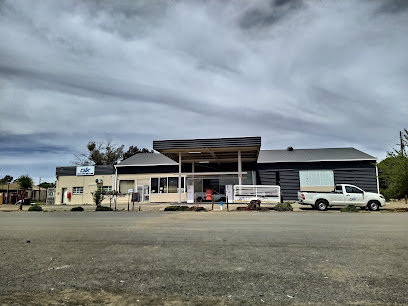
OVK Trade – Hobhouse is a Agricultural cooperative establishment in Hobhouse, Free State, South Africa
OVK Trade – Hobhouse: Agricultural Cooperative Services and Customer Experience
OVK Trade – Hobhouse operates as a regional trade point within the OVK Group, a diversified agricultural company headquartered in Ladybrand. The Hobhouse branch is part of a broader network that provides a wide range of products and services to clients across many agricultural sectors in South Africa’s Free State. The OVK Group emphasises expansion and quality of service for multiple stakeholders, positioning Hobhouse as a local hub for farmers and agribusinesses in the area.
The store at Hobhouse is aligned with OVK’s comprehensive product portfolio. Main offerings span the agricultural supply chain, including grain handling, animal husbandry inputs, and value-added agribusiness services. Visitors will encounter a mix of feed, fertilisers, fencing and equipment, as well as access to financial, logistics, and insurance solutions designed for farmers. The product roster mirrors OVK’s broader catalogue, with emphasis on grain, livestock-related products, and farm essentials that support day-to-day operations and production planning.
In addition to core retail services, OVK Hobhouse participates in the group’s broader activity around livestock markets and related services. The OVK platform includes on-site and online auctions, with options for on-site and online sale events typical of OVK’s broader operations. This auction activity complements the store’s product range by connecting buyers and sellers across the region and offering exposure to market pricing and livestock turnover.
Customer experience, as reflected by public reviews of OVK stores in the network, tends to highlight practical and service-oriented qualities. Reviewers consistently note that staff are approachable, knowledgeable, and willing to assist with requests and sourcing items. Several customers mention integrity and dependable service as defining features of their OVK experience, emphasising timely delivery and staff who take the extra step to ensure needs are met. While individual experiences vary, the recurring themes point to a workforce that prioritises helpful, courteous, and efficient customer interactions.
Typical interactions at Hobhouse and similar OVK branches usually revolve around placing orders for grain inputs, fertilisers, feed, and equipment, with a focus on local availability and regional logistics. OVK’s online and mobile platforms are part of the ecosystem, offering information about products, services, and the company’s application tools that support ordering and information access. The mobile app, along with regionally accessible contact points, aids customers in coordinating purchases, arranging logistics, and engaging with specialist services.
Service breadth at Hobhouse mirrors OVK’s multi-service model, which includes:
- Grain handling and related services, with access to grain depots and weighbridge information where applicable.
- Animal health inputs and livestock support, including products for cattle, sheep, goats, and other farm stock.
- OV Kunsmis fertilisers and soil health solutions.
- Livestock-related services, including wool and mohair inputs, and live animal handling.
- Mechanisation and motor agency services, supporting farm equipment procurement and maintenance.
- Logistics and client financing to assist with payments, delivery scheduling, and equipment purchases.
- Insurance and risk management services designed for farming operations.
- Technical field services and on-farm testing, including fleece testing and shearing-related services.
- Trade, tyres & fuel outlets as part of the broader trade network.
Visitors seeking practical tips can benefit from preparation before a visit. It is advisable to confirm local stock and requests ahead of collection or delivery, and to utilise OVK’s app and online resources for product information and to stay informed about market updates such as grain reports and livestock auction outcomes. Engaging with staff at Hobhouse for specific regional offerings can help tailor solutions to farm size, climate, and production practices.
While explicit business hours are not published for the Hobhouse location on the pages reviewed, OVK’s network is built to support farmers across the region with regular access points, regional offices, and depots in many towns. The Hobhouse outlet serves the local agricultural community within the Free State and surrounding districts, reinforcing OVK’s role as a locally accessible partner in day-to-day farming operations, supply chain planning, and market engagement.
Location context confirms Hobhouse as part of the OVK Handelstak / Trade network, central to the town of Hobhouse in the Free State. The broader OVK footprint includes multiple towns and depots across the region, providing farmers with nearby access to products, services, and market information essential for effective farm management.
Hobhouse
Free State
South Africa
Sorry, no records were found. Please adjust your search criteria and try again.
Sorry, unable to load the Maps API.
Agricultural Cooperative Services in Hobhouse, Free State
Agricultural cooperatives in Hobhouse, a town in the Free State, provide a range of services designed to support local farming communities. These organisations operate as member-owned entities that aim to improve access to inputs, markets, knowledge, and financial services. By pooling resources, smallholders and larger farmers alike may benefit from economies of scale, shared equipment, and cooperative marketing initiatives that help stabilise prices and reduce procurement costs.
The typical service offering in this region includes access to agricultural inputs, such as seeds, fertilisers, pesticides, and planting materials. Cooperatives often act as procurement hubs, negotiating bulk prices on behalf of members and distributing supplies through local branches or spokespeople. In addition, many cooperatives provide access to basic farm tools and equipment, maintenance services, and rental options for machinery that may be prohibitively expensive for individual farmers to own outright.
Technical support and knowledge transfer form another core element. Cooperative services commonly include training programmes, extension-style advice, and information leaflets covering best practices in crop management, soil health, pest and disease control, and post-harvest handling. Workshops may focus on seasonal planning, input optimisation, water management, and sustainable farming techniques that align with local conditions and climate patterns in the Free State.
Marketing and supply chain assistance are frequently featured. Cooperatives help farmers connect with local markets, retailers, and sometimes processing facilities. By coordinating harvest schedules and standardising product quality, cooperatives can enhance bargaining power and reduce the costs associated with marketing and transport. Some organisations also offer guidance on value addition opportunities, such as basic processing or packaging, to help producers access higher-value routes to market.
Financial services and risk management are often integrated into cooperative activities. Members may gain access to savings schemes, credit facilities, or revolving funds that support input purchases, equipment hire, or working capital needs. In some instances, cooperatives provide collective insurance provisions or risk-sharing mechanisms to mitigate losses from adverse weather, pests, or market volatility. Practical support may include assistance with record‑keeping, budgeting, and financial literacy tailored to smallholder operations.
Practical considerations for those engaging with agricultural cooperatives in Hobhouse include governance, membership criteria, and transparency. Cooperative structures typically emphasise democratic participation, with member-owners having a say in key decisions and the direction of services. Prospective members should review the organisation’s constitution, fee structures, and voting rights to understand how the cooperative operates. It is prudent to inquire about the reliability of supply chains, the availability of reliable input stock, and the accessibility of services in nearby communities, particularly for farmers located outside the town centre.
Logistical factors also matter. The climate and soil conditions of the Free State influence which crops are prioritised and how inputs are allocated. Members should consider the seasonal cycles, irrigation availability, and transport links when planning collaborations through the cooperative. Additionally, the proximity of warehouses, distribution points, and processing facilities can affect timeliness and costs associated with deliveries and market access.
Overall, agricultural cooperative services in Hobhouse tend to emphasise practical support that strengthens farm viability. By combining access to inputs, knowledge, and market exposure within a shared framework, farmers and producers can optimise resource use, improve product consistency, and enhance resilience in the face of weather variability and market fluctuations. For prospective participants, understanding governance, service scope, and logistical arrangements is essential to maximise the benefits offered by these community-focused organisations.